




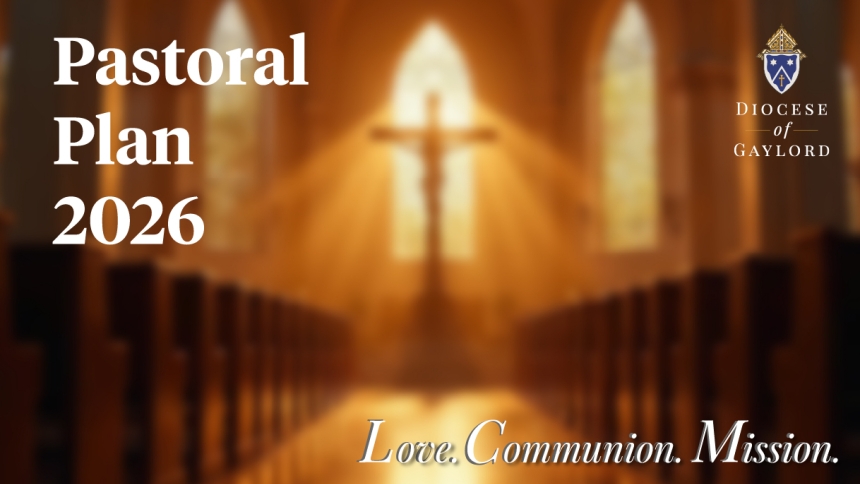
GAYLORD: The Diocese of Gaylord today shared Pastoral Plan 2026, a diocesan wide restructuring and renewal effort formed through a synodal process, in-depth review of diocesan and parish data, collaboration and prayerful discernment with clergy, parish leaders and lay faithful across the diocese. Implementation begins July 2026.
Most Reverend Jeffrey J. Walsh, Bishop of Gaylord, said: “For more than a year, we have walked this path together—priests, deacons, directors of parish life, finance and pastoral councils and parish leaders—listening in the Spirit and studying the realities before us. This plan did not emerge in a haphazard way; it reflects collaboration, prayerful discernment and data driven review of our current and future realities. As we begin implementation, I ask our diocesan family to embrace the future with the credo of Love, Communion and Mission.”
What the Plan Includes
Beginning in July 2026, the plan will:
- Right-size the diocese: 2 parish closures and 20 limited use designations
- Establish 18 new parish clusters; 16 two-parish clusters and three 3 parish clusters; previous clusters of four or five parishes will be abolished
- Update priest assignments to balance workloads and strengthen pastoral presence, supported by parochial vicars, many of whom are international priests
- Continue support to 17 unchanged parish structures
- Sustain Catholic education (16 schools unchanged) and continue investment in vocations, lay formation and youth/young adult initiatives
Bishop Walsh added: “We cannot underestimate the tasks that lie ahead, nor can we lose sight of Divine Providence. These decisions were difficult and made with attention to details like Mass attendance, priest availability, finances, geography and future projections—but above all, with a vision of faithful stewardship for the gift of the Catholic Church across the 21 counties of northern lower Michigan. Our hope is twofold: to enrich parish and sacramental life with renewed missionary zeal and to provide a more balanced workload for clergy.”
Acknowledging the Human Reality
“To those who will experience the closure or limited use of a beloved parish, I acknowledge your hurt,” the bishop said. “My own family lived through a parish closure. We know the sorrow, and we also know that we are never left abandoned and remain as a family of faith. To those with new cluster structures, I ask for understanding and patience. Please be welcoming – in the practical things like parking and pews, and in the deeper gift of sharing ministries and volunteering. And to parishes with minimal changes, be ready to receive and accompany brothers and sisters who may join your community.”
Investing for the Future
The plan affirms targeted investments in:
- Vocations (discernment events, accompaniment and diocesan outreach)
- Lay formation (including the envisioned JMJ Holy Family Institute for adult education and formation)
- Youth and young adults (new initiatives to invite leadership and missionary discipleship)
Bishop Walsh continued: “We are in the midst of a genuine Eucharistic revival; communion with our Lord and each other is our strength for the journey. By patiently cultivating seeds of faith now, I am convinced God will bring about generational growth in the Diocese of Gaylord. This pruning is for more abundant fruit—for Love, Communion and Mission.”
Key Dates
- February–July 2026: Transition planning and parish support
- July 2026: Implementation begins across the diocese
Learn More
Bishop’s Video Message: Hear the bishop share the plan and invitation to walk forward in hope.
Bishop’s Pastoral Letter: Read the full letter announcing the plan.
Complete Plan: Explore the introduction, summary of diocesan changes, and vicariate specific details (parish names for closures and limited use, new clusters and priest assignments).