




For Sister Chris Herald, OP, Director of Parish Life at St. Anthony of Padua Parish in Mackinaw City, the story of the Grand Rapids Dominican Sisters is not simply history. It is the story of women who answered God’s call with courage, humility and missionary zeal.
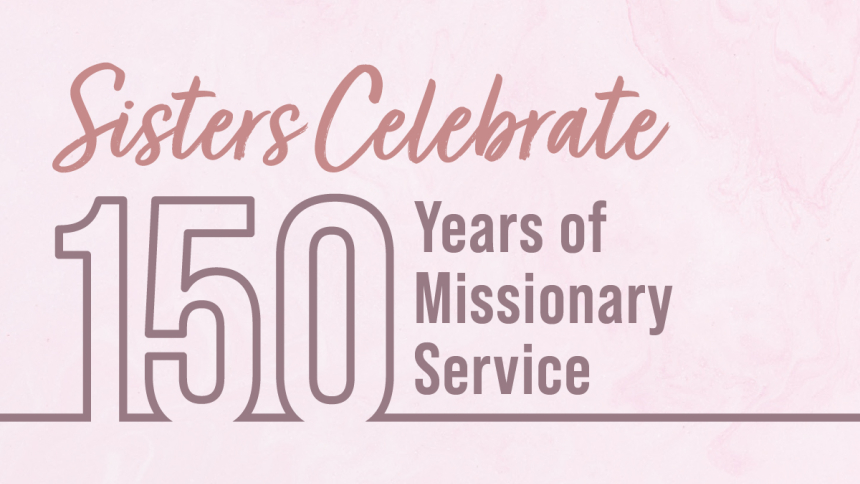
As the congregation celebrates 150 years of ministry, Sisters Chris and Mary Navarre reflect on generations of Sisters who carried the Catholic faith into rural northern Michigan through education, music, parish ministry and lives rooted in prayer.
“They worked until they could not work anymore,” Sister Chris says. “This life is not about material things. It is about how I can best serve God’s people.”
Sister Mary Navarre, OP, Archivist Emerita for the congregation, explains that the congregation’s roots trace back to Dominican Sisters from Regensburg, Germany, who arrived in New York City in 1853 to teach immigrant children.
In 1877, four Sisters traveled to St. Francis Parish in Traverse City at the request of Bishop Casper Borgess to teach Catholic children in Northern Michigan. St. Francis Parish became the first motherhouse of the Grand Rapids Dominican Sisters, making 1877 the founding year of the congregation and 2027 its 150th anniversary.
“The Sisters were called by God and moved by a missionary spirit to leave the comforts and security of cloistered life,” Sister Mary reflects. “They strengthened the faith, built skills and formed strong communities wherever they were sent.”
“Long before the Diocese of Gaylord was established in 1971, the Sisters already served throughout Northern Michigan,” explains Sister Chris. “They taught in small schools, formed children in the faith and strengthened parish life in communities where priests often traveled long distances between missions.”
Sister Mary adds, “The love the Sisters had for God and for one another spread outward to loving and serving the people in Gaylord and surrounding parishes.”
Forming Faith Through Education and Worship
Education quickly became the heart of the congregation’s mission. Many Sisters themselves had been taught by Dominican Sisters before entering religious life. Once they professed vows, they were expected to spend their lives teaching children and forming them in the Catholic faith.
The initials OP stand for Order of Preachers. Sister Chris says, “We preach whether it is in the pulpit or in the classroom.”
The Sisters expanded their ministry throughout Alpena, Grayling, Traverse City, Charlevoix, Prudenville, Gaylord, Lake Leelanau, Sutton’s Bay, Mackinaw City and several other cities in Northern Michigan. Sister Chris shares their congregation focused especially on poor rural communities where resources remained limited but faith remained strong.
“Resources were very limited, and you depended on what the farmers brought you to eat,” Sister Chris recalls.
Sister Mary articulates that the Sisters survived on small stipends and often served parishes unable to fully compensate them.
Their vows of poverty, chastity and obedience sustained them through hardship and taught communities the value of simplicity, sacrifice and generosity.
“It could not have happened without these ingrained values,” Sister Mary adds.
Music and liturgy also shaped the congregation’s ministry. “Nearly every convent included a Sister who taught music in classrooms and private lessons after school,” informs Sister Mary. “The Sisters introduced students to Gregorian chant, classical music and modern hymns.
“Each spring, the school produced a musical that brought together parents, families and parish communities,” Sister Mary reflects.
The Grand Rapids Dominican Sisters also helped lead liturgical renewal beginning in the 1930s through the work of Sister Jane Marie Murray and Dom Virgil Michel, OSB. Their efforts connected liturgy with social justice and prepared the congregation to embrace the reforms of the Second Vatican Council.
A Legacy That Continues to Endure
The congregation’s witness reached far beyond classrooms. The Sisters directed choirs, accompanied Masses, organized devotions and strengthened Catholic identity throughout rural northern Michigan. Sister Mary reflects that school musicals, May crownings, athletic programs and parish trips built strong communities centered on faith.
“Crises built communities too,” Sister Mary says, recalling devastating fires and difficult winters that united parish families through sacrifice and service.
Sister Chris believes the Sisters influenced so many lives because they lived alongside the people they served rather than above them.
“We were with the people and not above the people,” Sister Chris says.
Today, Sister Chris Herald is the last Grand Rapids Dominican Sister who, until this summer, actively served in the Diocese of Gaylord as a Director of Parish Life at St. Anthony of Padua in Mackinaw City.
Yet the congregation endures. Today, the Grand Rapids Dominican Sisters number 112. Most are now in their retirement years, with a handful continuing to serve in parish ministry or volunteer beyond our diocese. Now in their mid-60s through their late 90s, they remain a living testament to lives faithfully given in service to Christ and His Church.
“I have great pride in the 950+ Sisters who served in this diocese before me,” Sister Chris reflects.
As Catholics honor 150 years of the Grand Rapids Dominican Sisters, their witness continues to echo across northern Michigan.
Every classroom where children first learned about Christ, every choir loft filled with sacred music and every parish strengthened through their sacrifices remains part of their enduring legacy.
Though their active presence here has come to a close, their witness continues to inspire Catholic families—and invites our prayerful gratitude for the Sisters who have given so much in service to the Gospel.
“Our legacy challenges younger Catholics to serve with courage, generosity and joyful faith,” Sister Chris says. “For 150 years, the Grand Rapids Dominican Sisters carried Christ into northern Michigan one classroom, one parish and one family at a time.”